
CNC Machining Services: Tool Accessibility and DFM
CNC Machining Services depend not only on machine accuracy and cutting parameters, but also on whether the geometry of a component can be reached efficiently and reliably by the selected cutting tools. Tool accessibility is therefore an important part of Design for Manufacturing (DFM) in CNC machining. A feature may be theoretically machinable but difficult to produce because the cutter cannot approach it at a suitable angle, the tool must extend too far, the internal corner is too tight, or the required operation needs several setups. These conditions can increase machining time, tool deflection, tool wear, fixture complexity and inspection requirements. This article explains how tool accessibility affects CNC Machining Services, including tool diameter, tool length, overhang, internal corners, deep pockets, narrow slots, angled features, multi-axis machining and workholding. It also discusses practical DFM methods that engineers and purchasing teams can use to improve manufacturability without compromising the functional requirements of CNC Machined Components.
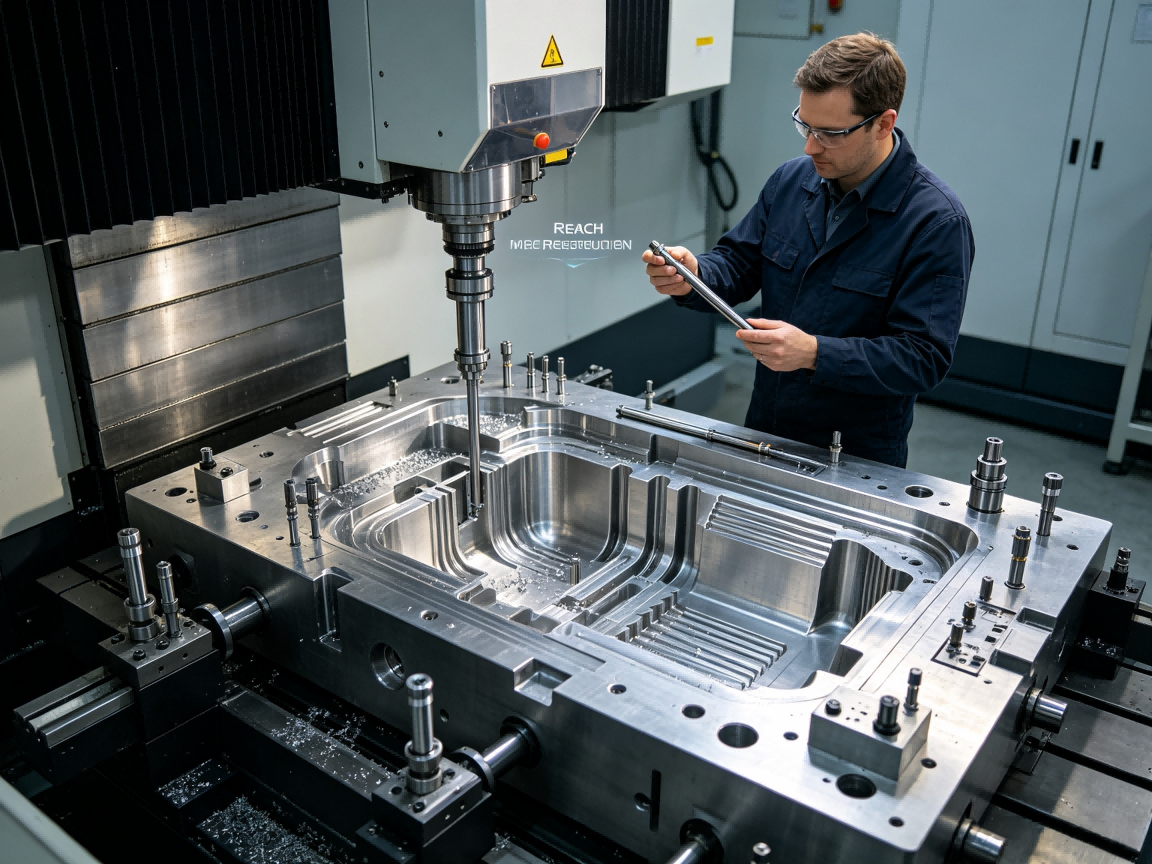
Tool accessibility refers to the ability of a cutting tool to physically reach a required machining feature while maintaining an appropriate cutting direction, tool orientation and machine clearance. In CNC Machining Services, accessibility must be considered before production because the geometry of a component directly affects tool selection and machining strategy.
A simple external surface is usually easy to reach with a standard end mill or face mill. A deep internal pocket, narrow slot or recessed surface can be much more difficult. The tool may need to be longer, smaller or angled to reach the feature. Each change can influence cutting stability and production efficiency.
Tool accessibility is determined by several factors:
Feature depth and width
Tool diameter
Tool cutting length
Tool holder dimensions
Tool overhang
Spindle and machine clearance
Internal corner radius
Part orientation
Fixture and workholding clearance
Number of required machining setups
Machine axis configuration
Required surface finish and dimensional tolerance
Good DFM practice considers these conditions during design rather than waiting until production begins.
When a tool cannot reach a feature directly, the manufacturer may need to change the cutter, increase tool length, rotate the part, add another setup or use multi-axis machining. These solutions can make the part manufacturable, but they may also increase cost and process complexity.
For example, a deep pocket machined with a long small-diameter end mill may experience greater tool deflection than a shallow pocket machined with a shorter, larger cutter. The longer tool may also be more sensitive to vibration. If the feature has a tight dimensional tolerance, the resulting machining condition can make process control more difficult.
Tool accessibility therefore affects several production variables simultaneously:
| Factor | Accessibility Influence | Possible Production Effect |
|---|---|---|
| Tool Diameter | Determines whether narrow features can be reached | May affect machining time and internal corner radius |
| Tool Length | Determines maximum accessible depth | Longer tools may increase deflection and vibration |
| Tool Overhang | Changes cutting stability | Can influence dimensional consistency and surface quality |
| Part Orientation | Changes the approach direction | May reduce or increase the number of setups |
| Internal Radius | Controls cutter size compatibility | Very small radii may require smaller tools |
| Fixture Clearance | Determines whether the tool can approach the feature | May require custom workholding or repositioning |
pemVerify all parameters against current test reports and applicable standards before use in specifications.emp
Tool diameter is one of the most important variables in CNC accessibility. A cutter must be small enough to enter a feature while remaining large enough to provide adequate cutting stiffness and productivity.
Consider an internal pocket with a narrow opening. A large cutter may provide excellent rigidity but cannot enter the opening. A smaller cutter may reach the pocket, but its reduced diameter can increase machining time and reduce cutting stability.
The relationship between tool diameter and internal corner radius is also important. Standard milling tools naturally produce rounded internal corners. A square internal corner usually requires a smaller cutter, a specialized tool or an additional manufacturing process.
From a DFM perspective, unnecessarily small internal corner radii should be avoided when they do not provide a functional benefit. A larger radius can allow the use of a larger cutter, which may improve cutting stability and reduce machining time.
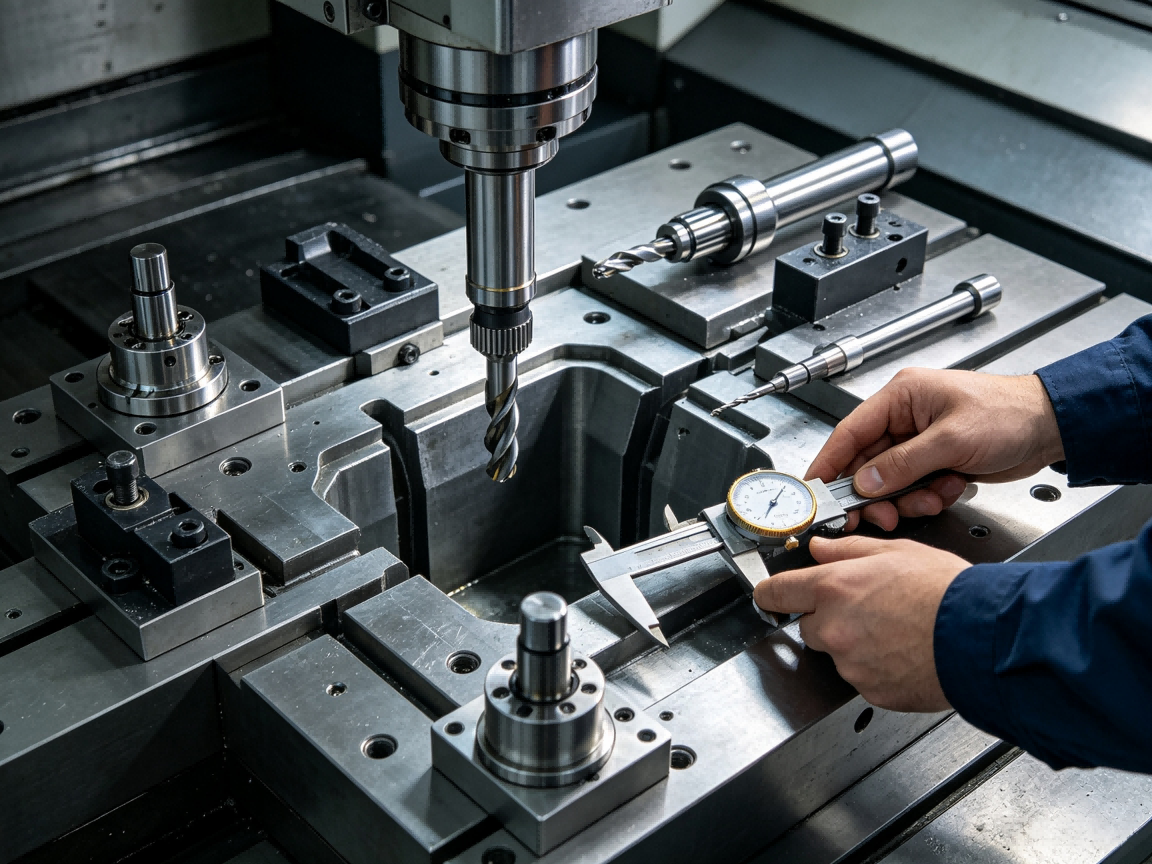
Deep features frequently require extended-reach tools. However, increasing tool length does not simply solve an accessibility problem. The tool becomes more susceptible to bending and vibration as its unsupported length increases.
Tool overhang is particularly important because cutting forces can produce greater deflection when the tool extends farther from the holder. The effect becomes more significant when machining hard materials, deep cavities or components requiring tight dimensional tolerances.
In practical CNC Machining Services, engineers may therefore evaluate the following sequence:
Can a standard-length tool reach the feature?
Can the feature be redesigned to permit a shorter tool?
Can the tool diameter be increased?
Can the part orientation be changed?
Can another machining setup provide better access?
Is multi-axis machining technically justified?
This approach avoids using an unnecessarily long tool simply because the original geometry makes access difficult.
Deep pockets are common in precision components, housings, fixtures and mechanical structures. Their manufacturability depends on depth, width, corner radius, opening geometry and the required tolerance.
A deep and narrow pocket creates a particularly challenging condition. The cutter may need to extend deeply into the cavity while remaining small enough to pass through the opening. This combination can reduce cutting stability.
DFM improvements may include increasing the pocket width, reducing unnecessary depth, adding a larger internal radius or changing the feature orientation. These modifications should only be made when they do not interfere with assembly, strength, sealing or other functional requirements.
Narrow slots can also create tool accessibility problems. A slot that is only slightly wider than the selected cutter leaves limited clearance and may require multiple passes. If the slot is deep, tool deflection becomes an additional concern.
When a narrow slot is functionally necessary, the engineering team should identify its actual purpose. If the slot is used for clearance, drainage, weight reduction or assembly, the geometry may sometimes be adjusted without affecting the component's function.
For CNC Machining Services, functional requirements should determine the minimum feature size rather than designing extremely small features without a clear engineering purpose.
One of the most common DFM considerations in CNC milling is the difference between the desired component geometry and the geometry naturally produced by rotating cutting tools.
Because most milling cutters have circular profiles, an internal corner will normally contain a radius. The smaller the required radius, the smaller the cutter must generally be.
For example, a large internal radius may allow a rigid cutter to remove material efficiently. A very small radius may require a small-diameter tool and additional finishing passes. If the small radius is not functionally necessary, increasing it can simplify machining.
Engineers should therefore distinguish between:
Functional corner requirements
Clearance requirements
Tool-generated corner radii
Cosmetic geometry
Assembly-driven geometry
This distinction can prevent unnecessary machining complexity.
Sometimes the geometry itself does not need to change. The problem can be solved by changing the orientation of the workpiece.
A feature that is difficult to reach from the primary setup may become accessible when the component is rotated. However, additional setups introduce new datum and workholding considerations.
Each additional setup can create opportunities for:
Datum transfer error
Fixture positioning variation
Accumulated angular error
Additional setup time
Additional inspection requirements
For this reason, DFM is not simply about making every feature accessible. It is about finding an efficient and controllable manufacturing orientation.
When conventional three-axis machining cannot reach a feature efficiently, 3+2 or simultaneous multi-axis machining may provide another solution.
In 3+2 machining, the workpiece or tool orientation can be changed so that the cutting tool approaches the surface from a more suitable direction. This can improve access to angled surfaces and reduce the number of physical setups.
Simultaneous multi-axis machining provides even greater tool orientation flexibility. It can be useful for complex curved surfaces, deep features and geometries where continuous tool orientation is required.
However, multi-axis machining should not automatically be treated as the preferred solution. Machine capability, programming requirements, fixture design, inspection and production volume must all be considered.
| Machining Approach | Typical Accessibility Advantage | Engineering Consideration |
|---|---|---|
| 3-Axis Machining | Suitable for many prismatic features | May require additional setups for inaccessible surfaces |
| 3+2 Machining | Improves access to angled features | Requires suitable machine and fixture strategy |
| Simultaneous Multi-Axis | Provides continuous tool orientation | Programming and process control can be more complex |
pemVerify all parameters against current test reports and applicable standards before use in specifications.emp
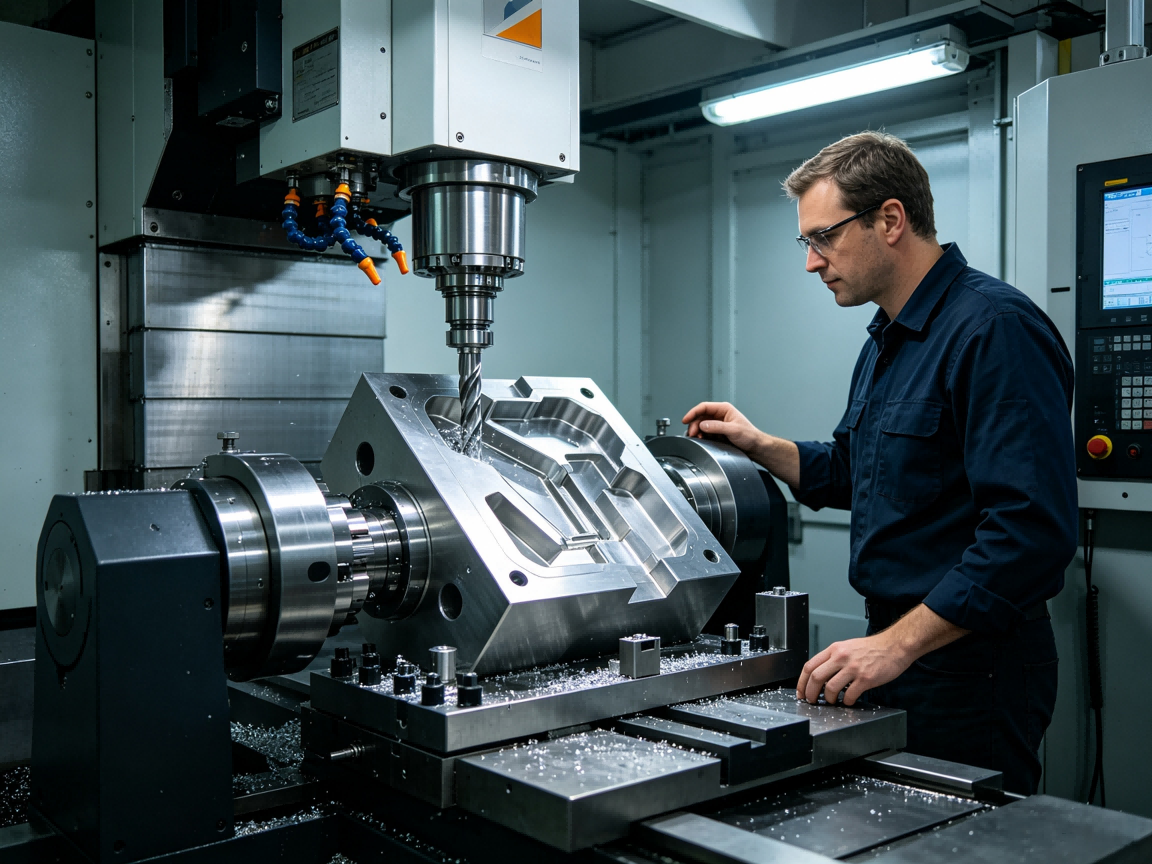
Tool access must also be evaluated together with the fixture. A feature may be reachable by the cutting tool in a CAD model but blocked by the actual workholding system.
Clamps, locating pins, fixture plates and supporting structures can all interfere with tool movement. This is particularly important when machining thin components or parts with features located close to an edge.
A practical DFM review should therefore consider both tool clearance and fixture clearance. The tool must be able to reach the feature while the workpiece remains securely supported during cutting.
Good workholding can also reduce vibration and part movement. This is especially important when machining components with thin walls, deep pockets or tight dimensional tolerances.
Tight tolerance requirements make accessibility more important because the cutting process must remain stable enough to achieve the specified dimensions.
A difficult-to-access feature may require a long tool, small cutter or multiple operations. Each condition can increase process sensitivity. When the tolerance is unnecessarily tight, the manufacturing process may become more complicated without providing additional functional value.
For this reason, engineers should evaluate tolerances together with feature accessibility. A tolerance should reflect the actual functional requirement of the component rather than being applied uniformly to every dimension.
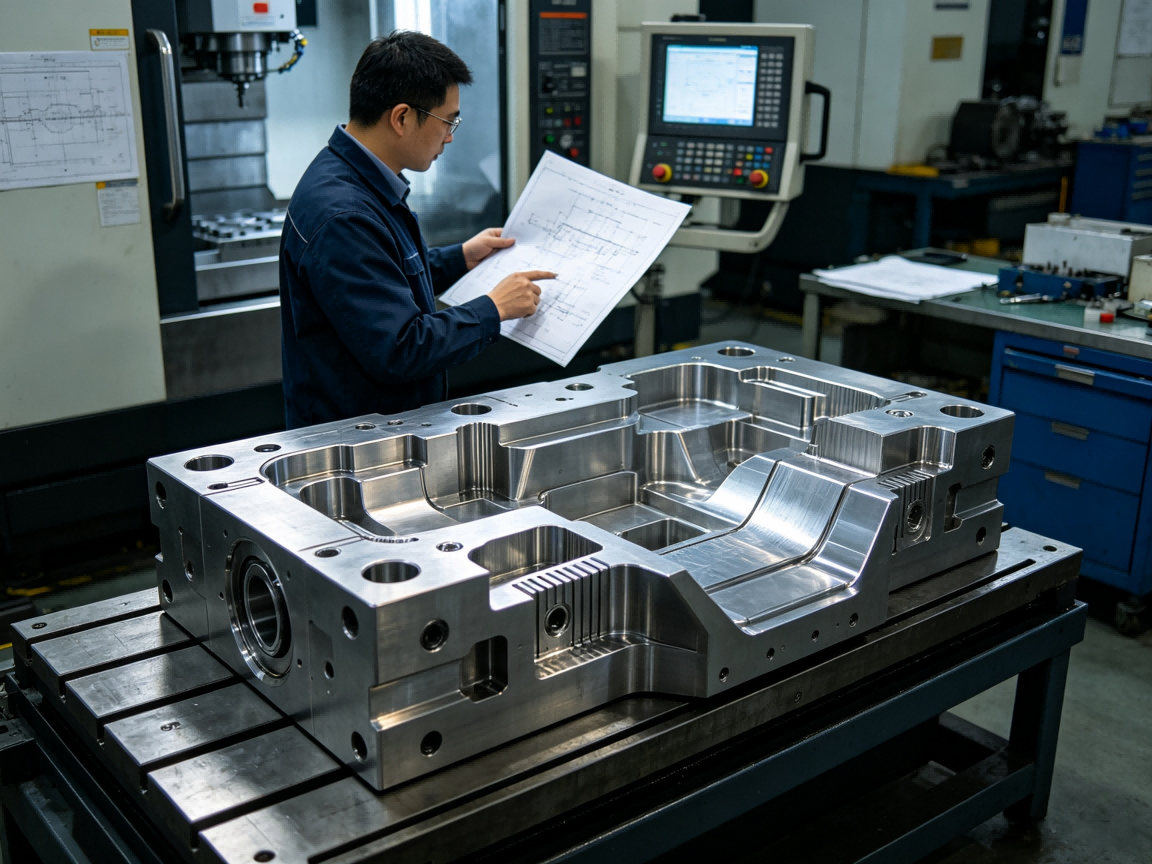
A DFM review should be performed before CNC Machining Services begin production. The purpose is not to change the design unnecessarily, but to identify features that could create manufacturing problems.
A practical DFM review can include:
Reviewing the complete 3D model and 2D drawing
Identifying deep and narrow features
Checking internal corner radii
Evaluating tool diameter requirements
Checking tool reach and overhang
Evaluating fixture and workholding clearance
Identifying features requiring multiple setups
Reviewing angled and complex surfaces
Checking tolerance requirements
Confirming inspection accessibility
This review helps identify potential production risks before material is cut.
DFM can reduce cost by simplifying the machining process rather than simply reducing material consumption.
A design that uses larger internal radii may allow larger cutters. A shallower pocket may reduce tool extension. A better part orientation may eliminate a setup. A reasonable tolerance may reduce finishing operations and inspection time.
These improvements can influence:
Machining cycle time
Tool consumption
Fixture requirements
Setup time
Programming effort
Inspection time
Production repeatability
However, cost reduction should not compromise the functional requirements of the component. DFM decisions should always be evaluated against assembly, performance, strength, sealing and service requirements.
A deep cavity with a narrow opening may require a long, small-diameter cutter. This can increase deflection and vibration. Increasing the opening or reducing unnecessary depth may improve manufacturability.
A small internal radius can require a small cutter and additional finishing operations. If the radius is not functionally required, increasing it can simplify machining.
Recessed features may not be directly accessible from a standard three-axis setup. A different orientation, additional setup or multi-axis operation may be necessary.
The tool may have sufficient geometric access but collide with clamps or locating components. Fixture design must therefore be considered during process planning.
Very tight tolerances on difficult-to-access features can increase process complexity and inspection requirements. Functional tolerances should be reviewed before production.
Effective communication between the design team and CNC machining supplier can prevent many accessibility problems. When drawings, 3D models and functional requirements are reviewed together, manufacturing constraints can be identified earlier.
Useful information includes material, critical dimensions, geometric tolerances, surface requirements, feature functions, expected production quantity and any assembly constraints.
For purchasing teams, it is also useful to ask how the supplier plans to machine difficult features. A supplier should be able to explain the general machining approach, workholding strategy, tool accessibility and inspection method without relying only on a final price.
| DFM Check | Key Question |
|---|---|
| Tool Diameter | Can a sufficiently rigid cutter enter the feature? |
| Tool Reach | Can the required depth be machined without excessive overhang? |
| Internal Radius | Is the specified radius functionally necessary? |
| Part Orientation | Can the feature be accessed efficiently from the selected setup? |
| Fixture Clearance | Can the cutter reach the feature without fixture interference? |
| Tolerance | Is the tolerance appropriate for the actual functional requirement? |
| Inspection | Can the finished feature be measured reliably? |
| Production Volume | Does the machining strategy fit the expected quantity? |
pemVerify all parameters against current test reports and applicable standards before use in specifications.emp
Dongguan city Jifan Precision Machinery Co., Ltd provides CNC Machining Services for customers requiring prototype development, customized components and production machining. The company combines CNC production capabilities with engineering review, automated production lines and customized manufacturing support.
For components with difficult-to-access features, the manufacturing process can be evaluated from tool accessibility, workholding, machining sequence and dimensional inspection perspectives before production.
Tool accessibility determines whether a cutter can reach a feature with suitable clearance, stability and cutting conditions. Poor accessibility can increase tool overhang, setups, machining time and process complexity.
Small internal radii generally require smaller cutters. Larger radii can often permit larger and more rigid tools, which may simplify machining and improve cutting efficiency.
Not necessarily. A longer tool can provide greater reach, but increased overhang may also increase deflection and vibration. Redesigning the feature or changing the machining orientation may provide a more stable solution.
No. Multi-axis machining can improve access to complex features, but machine capability, programming, workholding, inspection and production requirements must still be evaluated.
DFM can reduce machining cost by simplifying tool selection, reducing unnecessary setups, improving tool accessibility, shortening machining time and avoiding unnecessarily difficult tolerances or geometries.
Tool accessibility is a fundamental part of CNC Machining Services and should be considered during product design rather than after machining problems appear. Tool diameter, tool length, overhang, internal corner radius, feature depth, part orientation and fixture clearance all influence how efficiently a CNC component can be produced.
Effective DFM does not mean removing complex features from a design. Instead, it means understanding which features are functionally necessary and designing them in a way that allows stable, repeatable and inspectable machining. By evaluating tool accessibility together with tolerance, workholding, toolpath strategy and inspection requirements, engineers and purchasing teams can reduce unnecessary manufacturing complexity while maintaining the required performance of CNC machined components.
Share your project parameters for a technical review.
Denna webbplats använder cookies för att säkerställa att du får den bästa upplevelsen på vår webbplats.

 English
 Español
 Portugues
 Pусский
 Français
 Deutsch
 日本語
日本語 한국어
한국어 العربية
 Italiano
 Nederlands
 Polski
 ไทย
ไทย Türk dili
 Indonesia
 Tiếng Việt
 čeština
 Română
 Suomalainen


Kommentar
(0)